English
 Tiếng Việt

Plattform Industrie 4.0: how Germany’s smart factory push began
You have probably heard "Industry 4.0" used for almost anything with a sensor attached to it. The idea actually has a fairly specific origin. It started in Germany, as a deliberate plan to keep the country’s manufacturing sector ahead at a moment when software and the internet were starting to reshape how factories work.
Where the name came from
The German term Industrie 4.0 was presented to the public at the Hannover Messe trade fair in 2011. It grew out of the German government’s high-tech strategy, which looked for areas where research and industry could work together on long-term competitiveness.
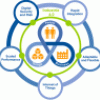
The "4.0" is a way of counting industrial revolutions: steam and mechanical power first, then electricity and mass production, then electronics and automation. The fourth step is about connecting machines, products and people through data, so that production can adapt itself rather than simply repeat the same process faster.
Why Germany cared so much
Manufacturing makes up a large share of the German economy, and German companies are among the world’s leading suppliers of industrial machinery. That strength also carried a risk. If the "intelligence" of future factories ended up in software platforms built elsewhere, machine builders could find themselves supplying the hardware while someone else captured the value.
There were other pressures too: an ageing workforce, higher labour costs than many competitors, and customers asking for more customized products in smaller batches. Smarter, more flexible factories looked like an answer to all of these at once.
From industry associations to a national platform
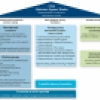
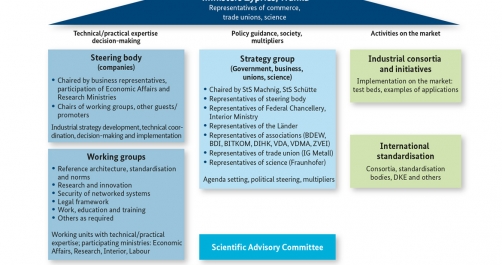
In 2013 three major German industry associations, BITKOM (digital economy), VDMA (machinery and plant engineering) and ZVEI (electrical and electronics industry), set up Plattform Industrie 4.0 to coordinate the work. Two years later the platform was broadened and led by the federal ministries for economic affairs and for education and research, bringing in trade unions, research institutes and more companies.
The shift mattered. Industrie 4.0 was no longer just a technology topic for engineers. It became a shared programme that also looked at standards, IT security, legal questions and what the changes would mean for workers and training.
What the platform actually works on
- Common standards: machines from different vendors need to describe themselves and exchange data in a consistent way. The platform’s reference architecture model, known as RAMI 4.0, and the "asset administration shell" concept are examples of this effort.
- Security: connecting production equipment to networks opens it up to new risks, so secure communication and identity for machines are a recurring theme.
- Work and skills: how jobs change when routine tasks are automated, and what training people need.
- Support for smaller firms: large corporations can run their own pilots, while small and mid-sized manufacturers need practical examples and test environments.
What this means outside Germany
You do not need a national programme to use the same thinking. Most of the early lessons from Industrie 4.0 apply to any manufacturer, including small and medium businesses in Vietnam:
- Start with a business problem, such as downtime, waste or slow order handling, not with a technology shopping list.
- Get the basics of data in order first. If orders, stock and production are still tracked in separate spreadsheets, connecting machines will not help much.
- Treat security as part of the design, not an add-on.
- Prefer open standards and systems you control, so you are not locked into one supplier.
For many companies, the first realistic step is a single system that holds sales, inventory, purchasing and production data. That is the kind of work TWF does in its custom software, ERP and integration projects, including ERP built on the open-source Apache OFBiz platform. If you are an IT leader wondering where to begin, our article on what Industrie 4.0 means for CIOs goes further into practical first steps.